Stakeholders and Material Topics
Stakeholder Engagement
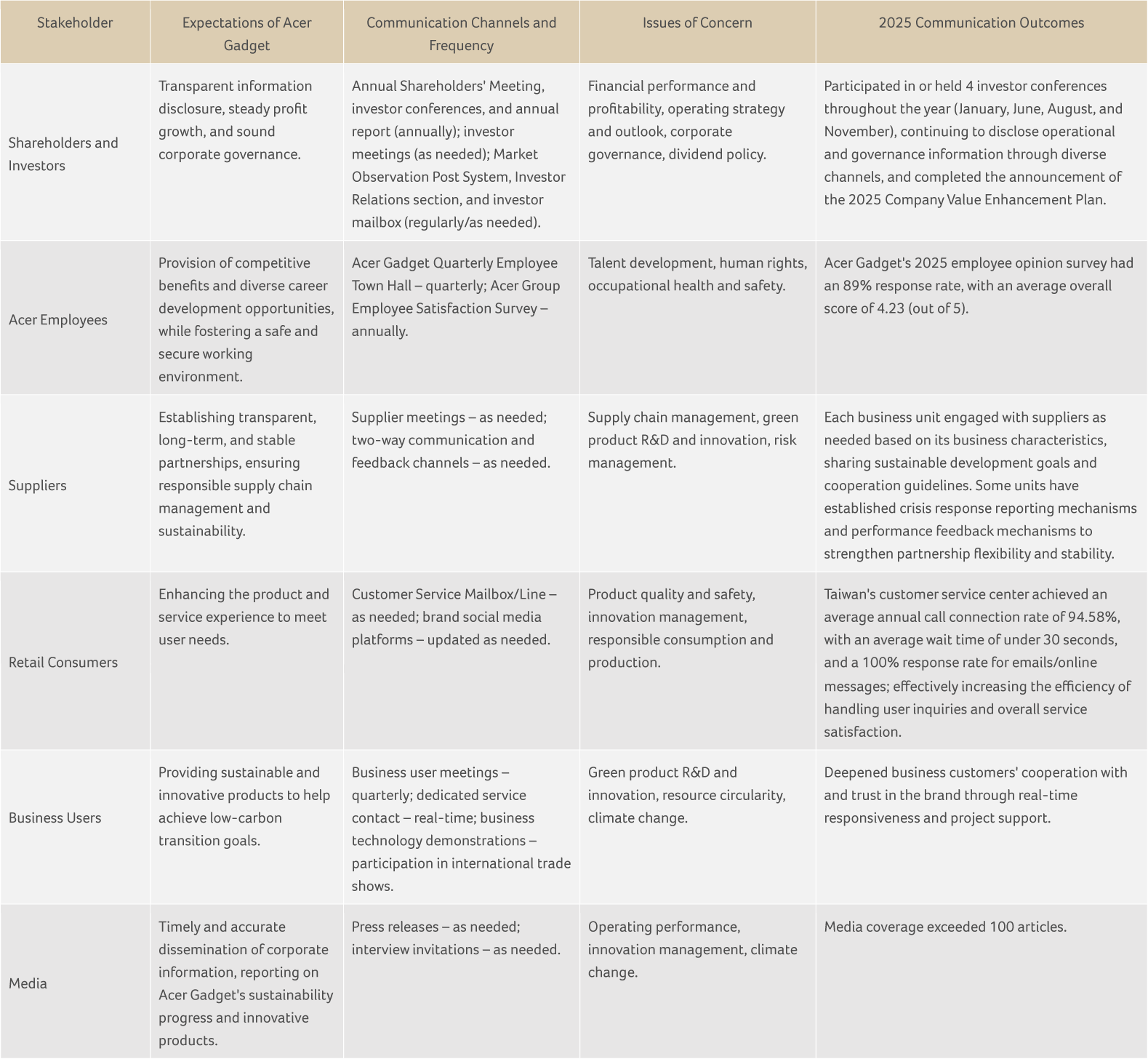
Stakeholder engagement is a key component of Acer Gadget’s process for identifying material topics and managing sustainability. Based on its operational characteristics, business relationships, and stakeholder concerns, the Company gathers input through questionnaires, meetings, dedicated mailboxes, and other communication channels, which serves as a reference for identifying material topics and informing related management work.
Stakeholder Identification and Engagement Process
1. Identifying Stakeholders
Based on the Company’s business model, business relationships, and industry characteristics, the Company identifies key stakeholders who may be affected by the Company’s operations, or whose decisions and actions may affect the Company’s operations.
2. Understanding Concerns and Communication Needs
Through questionnaires, meetings, dedicated mailboxes, and other communication channels, the Company gathers the opinions and concerns of different stakeholders regarding governance, environmental, and social issues.
3. Engagement and Feedback
Based on the characteristics and actual needs of different stakeholders, the Company communicates through corresponding channels, and uses the input gathered—based on the nature and significance of each issue—as a reference for identifying material topics, sustainability management, and information disclosure.
Acer Gadget has identified six categories of major stakeholders based on its operations and business relationships, including: shareholders and investors, employees, suppliers, retail consumers, business users, and the media.
Acer Gadget values communication with its stakeholders, and continues its existing stakeholder engagement mechanism. Based on the characteristics and needs of different stakeholders, the Company gathers opinions and suggestions through dedicated mailboxes, internal communications, questionnaires, and other appropriate channels, which serve as a reference for the Company’s operational management and sustainability-related work.
For employees, the Company communicates through internal announcements, employee communication meetings, and employee satisfaction surveys; for external stakeholders, the Company has established relevant contact points and dedicated mailboxes tailored to their nature, providing channels for exchanging opinions and feedback.
Point of Contact (POC) and Main Communication Channels
| Stakeholder | Point of Contact (POC) | Main Communication Channels |
|---|---|---|
| Shareholder / Investor | Investor Relations Team | IR.AGT@acergadget.com |
| Employees | Human Resources Department | Internal announcements, employee meetings, employee satisfaction surveys |
| Customers (Retail Consumers / Commercial Users) | Customer Service Center | Service@acergadget.com |
| Suppliers / Media / Others | Sustainable Development Task Force | AGT.ESG@acergadget.com |
Stakeholder Engagement Survey
We have also set up an online stakeholder engagement questionnaire. Stakeholders can scan the QR code to fill out the survey form and share their suggestions and opinions, contributing together to Acer Gadget’s sustainable development.
Identification and Management of Material Topics
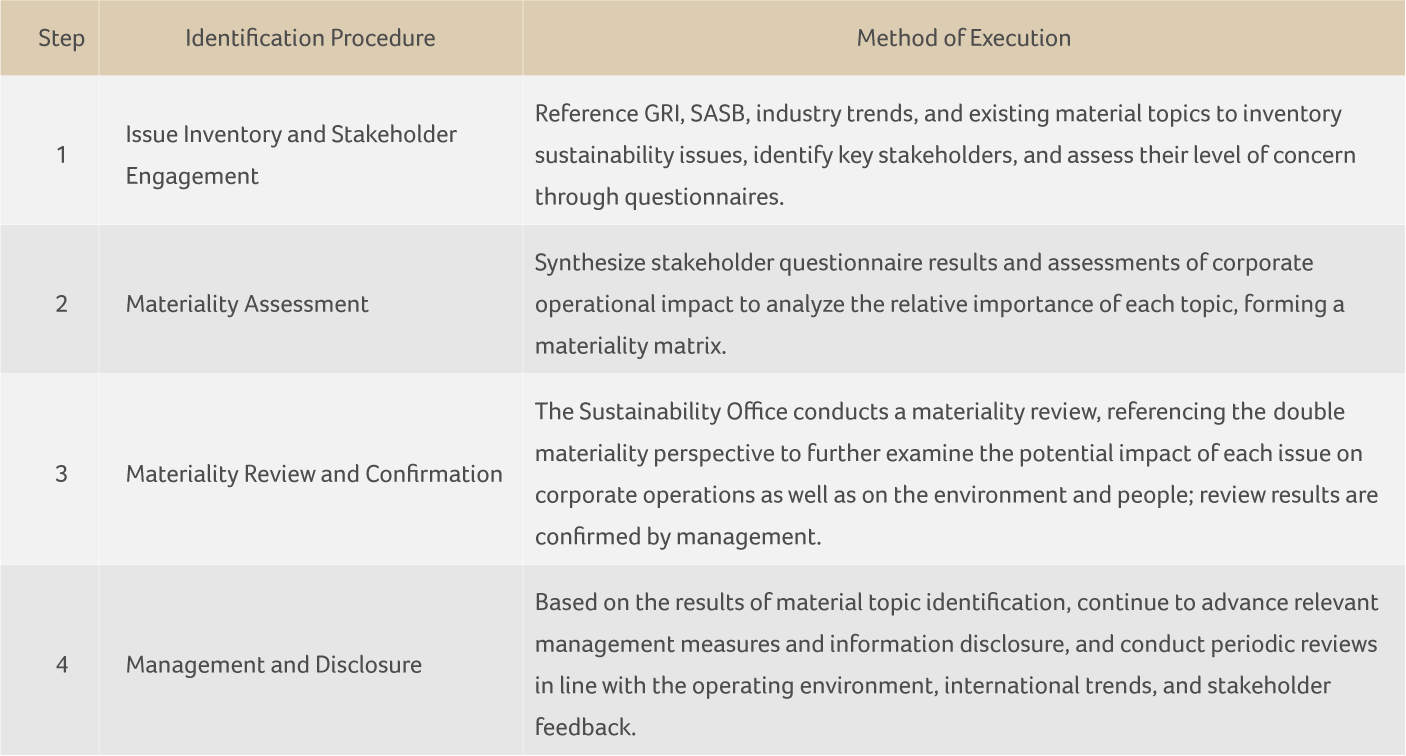
Acer Gadget follows the Global Reporting Initiative (GRI) Standards, and references the Sustainability Accounting Standards Board (SASB) Standards and other relevant international sustainability frameworks, taking into comprehensive consideration the Company’s operational characteristics, industry development trends, and stakeholder concerns, to continuously advance the identification and management of material topics.
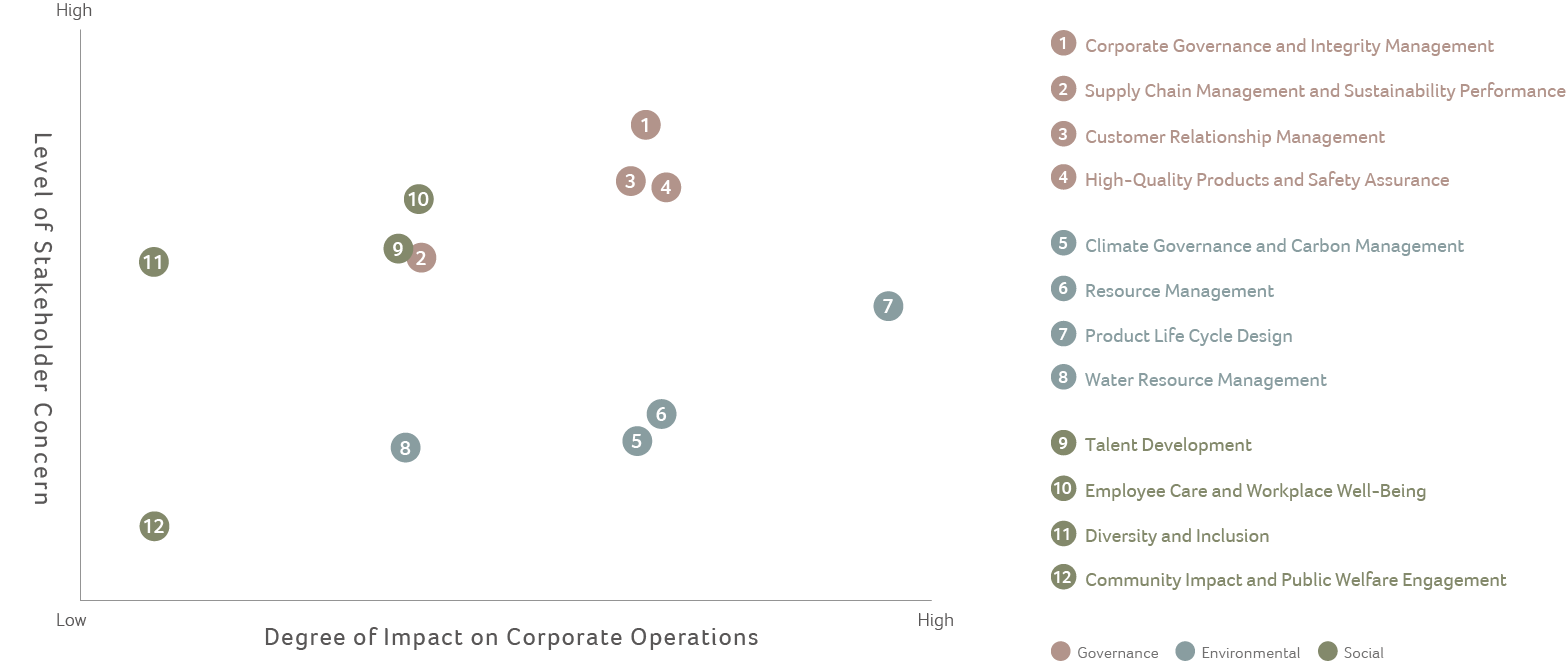
In 2025, the Company continued the material topic framework and identification mechanism established in 2024, reviewing the level of concern and operational relevance of various sustainability issues through stakeholder engagement, questionnaire surveys, and assessments of the Company’s operational impact, and formed a materiality matrix based on this review to serve as a reference for sustainability management and information disclosure.
To continuously improve the materiality assessment mechanism, this year the Sustainability Office conducted a materiality review, drawing upon the perspective of double materiality to further examine the potential impacts of relevant issues on the Company’s operations, the environment, and people. The results of this review were confirmed by management and serve as the basis for material topics and management prioritization. Relevant questionnaire results, assessment data, and review records have all been retained to maintain the consistency and traceability of the material topic identification process.
At the same time, in response to sustainability trends and stakeholder concerns, the questionnaire added new topics such as “Business Ethics and Anti-Corruption” and “Biodiversity Conservation” to broaden the scope of issue monitoring and opinion collection. This adjustment to the questionnaire topics primarily reflects an ongoing review of the scope of sustainability issue monitoring, and does not represent a change to existing material topics or management direction.
Going forward, the Company will continue to reference international standards such as GRI and SASB, as well as industry development trends, dynamically tracking the development and impact of material issues through ongoing stakeholder engagement and management review. The Company will continue to refine its sustainability governance, strategic management, and information disclosure, deepening its alignment with international sustainability disclosure frameworks to enhance corporate sustainability resilience and information transparency.
● Governance: Corporate governance and integrity management, supply chain management and sustainability performance, customer relationship management, high-quality products and safety assurance
● Environmental: Climate governance and carbon management, resource management, product life cycle design, water resource management
● Social: Talent development, employee care and workplace well-being, diversity and inclusion, community impact and public welfare engagement
Scope of Value Chain Impact for Material Topics
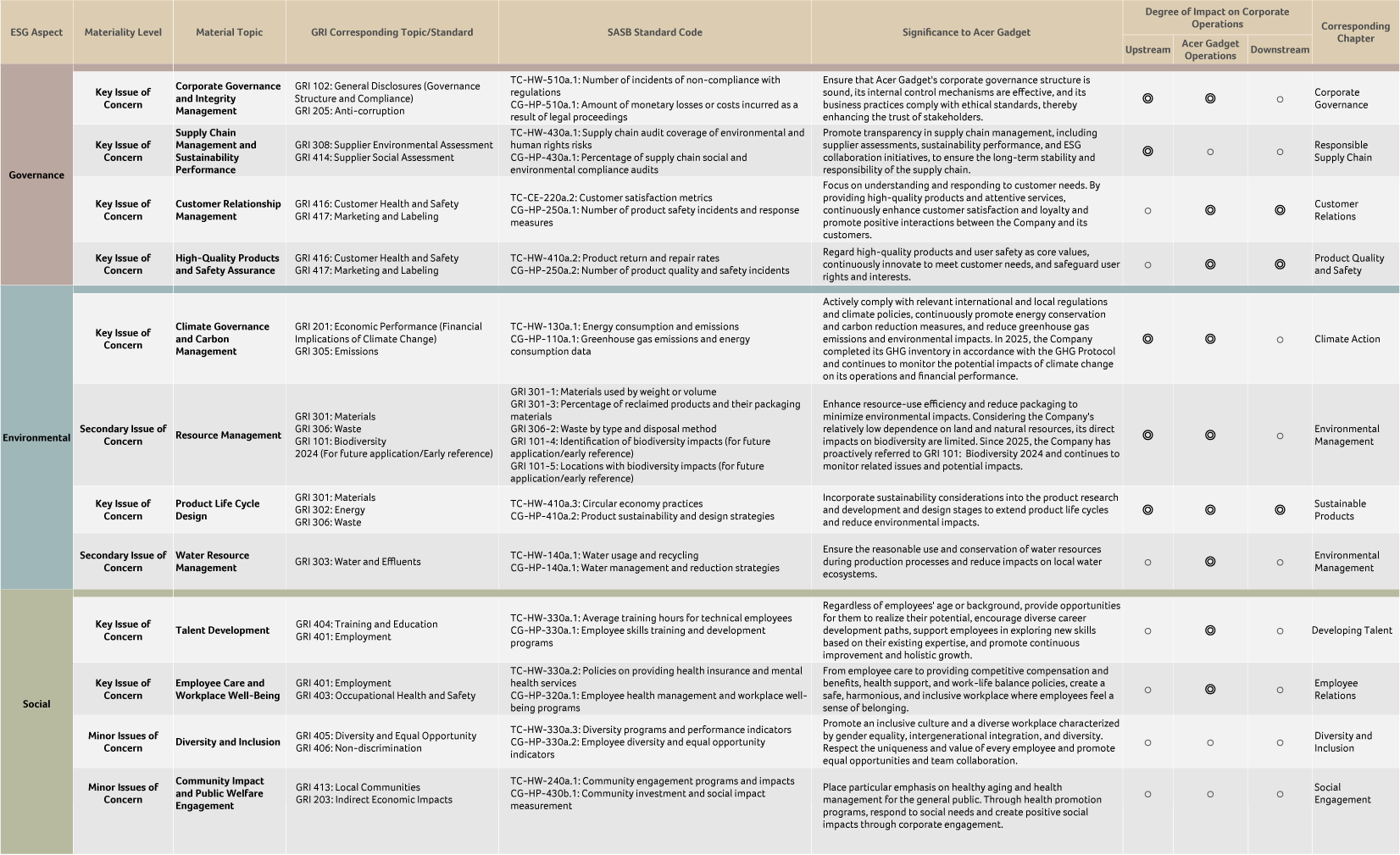
Acer Gadget follows the Global Reporting Initiative (GRI) Standards, and references the Sustainability Accounting Standards Board (SASB) Standards, the Company’s operational characteristics, and stakeholder feedback, to examine the potential impacts of material topics across different segments of the value chain, covering upstream operations, Acer Gadget’s own operations, and downstream operations.
The assessment process gathered feedback from stakeholders—including suppliers, internal operating teams, customers, and investors—through questionnaires, and combined this with an assessment of the Company’s operational impact to examine the degree of relevance between each material topic and the Company’s operations and value chain, serving as a reference for material topic identification, risk and opportunity identification, and subsequent management.
Based on the assessment results, the level of management attention is categorized as follows: